
Why does radon mitigation cost vary from house to house?
Two houses with similar floor areas can need different collection points or routes. Tell the estimator about additions, separate slabs, crawl areas, sump pits and finished rooms. Photographs can help explain access, but they do not replace the assessment needed to choose a system.
Ask the contractor to identify which feature of your house changes the proposal. A useful estimate connects the amount to work you can understand. The Air Sense cost guide is the source of the published planning range, rather than an independently measured St. Louis average.
What goes into the cost of a radon mitigation system?
Most St. Louis homes are mitigated with active sub-slab depressurization: a radon fan draws soil gas from beneath the slab through one or more suction points and vents it above the house. Each part of that design shows up in the price.
- Suction points. Separate slabs, additions and tight soil can each need their own radon suction point.
- Radon fan. The fan is sized to the suction the foundation needs and runs continuously.
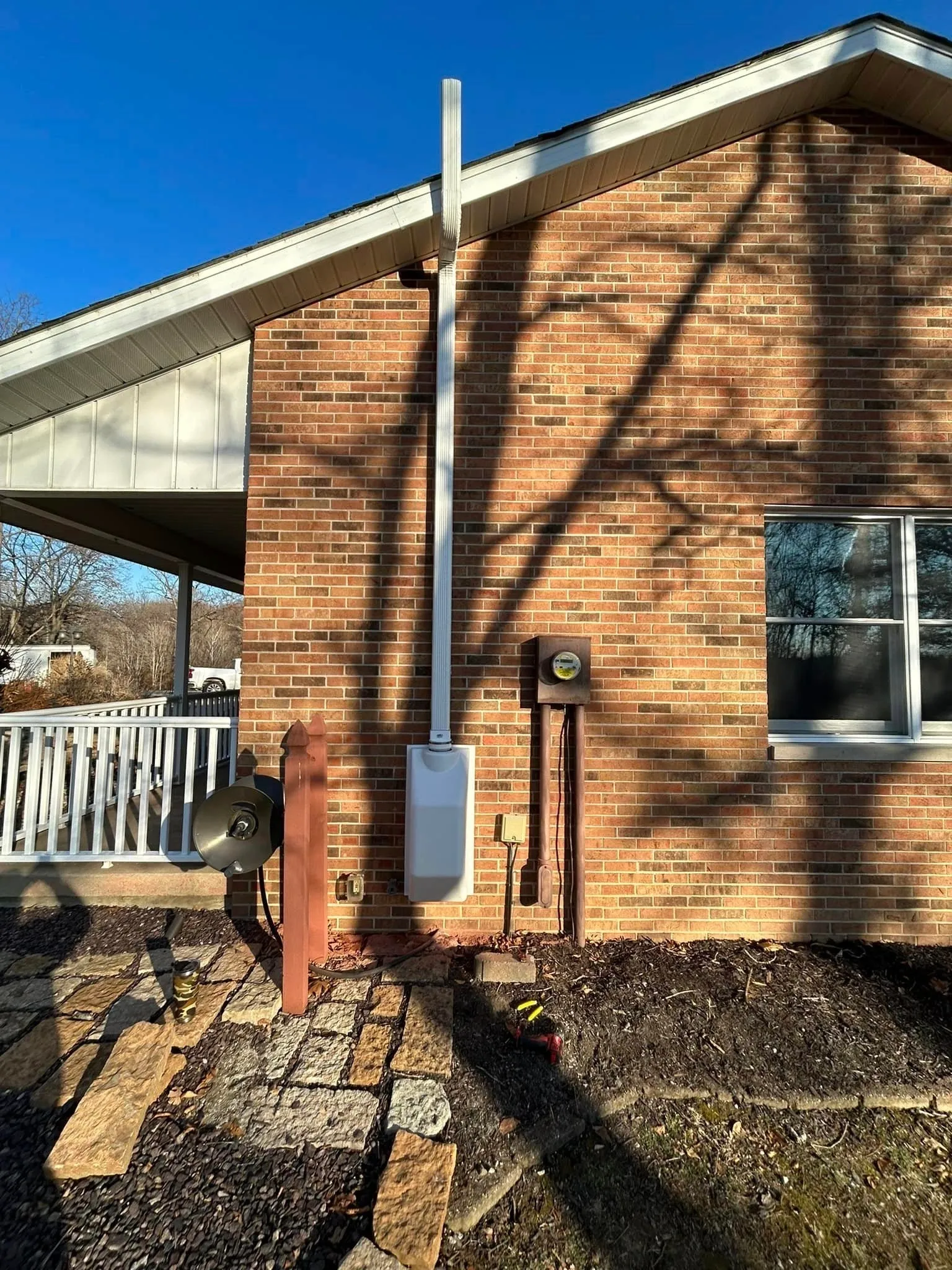
- Pipe route. Interior, garage and attic, or exterior routing changes materials, labor and how visible the pipe is.
- Sealing. Sump pits, floor cracks and other openings are sealed so the radon system can hold its vacuum.
- Crawl space vapor barrier. A crawl area needs a sealed membrane with suction, which is a different scope from slab work.
- Passive radon pipe. An existing passive pipe from construction may be usable for an active system, but it has to be assessed first.
- Electrical and the follow-up radon test. Confirm who provides power for the fan and who arranges the retest.
National average cost figures mix different foundations, markets and scopes. Air Sense publishes $1,100 to $3,200 for active sub-slab systems as a company planning range; the written quote for your home sets the actual radon mitigation cost.
What should a radon mitigation quote include?
| Item | What to compare |
|---|---|
| Foundation scope | Which slabs or crawl areas are covered, and how collection points are determined. |
| Pipe and fan route | Interior or exterior route, visible pipe, access and any roof or wall penetrations. |
| Electrical work | Who supplies the connection, whether separate electrical work is needed and who pays. |
| Sealing and access | Work at openings or sump covers, and continued access to equipment. |
| Finishes | Responsibility for patching, painting, flooring and other restoration. |
| Verification and warranty | Who arranges the radon test, receives the report and responds if further work is needed. |
Do not silently assume a blank item is included. Ask for a revised scope or written clarification before accepting either proposal. Our electrical-work guide helps separate the fan installation from electrical responsibilities.
How does foundation type change radon mitigation cost?
A sub-slab proposal and a crawl-space proposal are not interchangeable. For a crawl area, ask about the condition of the existing liner, preparation, membrane coverage, sealing and how the work connects with any basement system. Describe storage or access restrictions before the visit.
For a finished basement, ask the estimator to show the collection point and pipe route and identify surfaces that may be disturbed. Compare an interior route with an exterior route where both are feasible. The more concealed option is not automatically the right choice: access for installation and later service belongs in the decision too.
What does a radon mitigation system cost to own?
The installation total is only one part of the budget. Ask for the selected fan model and its power use, keep the equipment information, and allow separately for later testing and possible service. A retail replacement fan price does not include diagnosis, access or installation labor.
For an electricity estimate, multiply fan watts divided by 1,000 by operating hours, then by your electricity rate. Use the proposed equipment rather than a generic monthly allowance. If testing is priced separately, compare its purpose and report scope using the radon testing cost guide.
What the evidence can tell you about Air Sense
Air Sense Environmental operates this site and provides the services described here; Radon Cost St. Louis is not a separate contractor. The company publishes its planning range and service information so you can ask specific questions before accepting a quote.
“It was exactly what was quoted with no surprises, which I really appreciated.”
Excerpt from a May 2026 Google review of Air Sense, retained from the existing verified review collection. Read the original review. This is one customer’s experience, not a price promise or a substitute for your written scope.
What do you need before getting a radon mitigation quote?
If you have a result, share the entire report rather than only the number. If you have not tested, tell Air Sense before asking for installation pricing. Keep decisions about insurance, seller contributions or tax treatment separate from the contractor’s proposal until the responsible party confirms them.
Our is mitigation worth it guide explains how to consider an elevated result and ongoing responsibilities. To discuss an address in the St. Louis area, call 314-664-9807 with your report, foundation details, preferred route and timing. Confirm project coverage and availability for that address.
Questions before you book
Compare scope first. A lower total may omit electrical work, restoration or testing. Ask each contractor to explain those items and the response to an elevated follow-up result.
No. The published range describes active sub-slab systems. Crawl-space preparation, membrane work and mixed foundations need a property-specific proposal.
A planning figure helps you prepare. The dependable project price is the written quote for the assessed property and agreed scope.
Air Sense Environmental publishes $1,100 to $3,200 as a planning range for active sub-slab systems. Your written quote sets the actual price after the foundation, suction points, pipe route and electrical work are assessed.
Separate slabs, additions, footings and dense soil can limit how far suction reaches under the floor. Each area the vacuum cannot reach may need its own suction point.
It changes the scope. A crawl area is usually covered with a sealed vapor barrier connected to suction, so it needs its own proposal rather than the sub-slab planning range.
It can change the scope. A contractor may be able to add a fan to an existing passive pipe, but whether that pipe is usable has to be assessed on site.
Ask for the fan model and its wattage. Multiply watts divided by 1,000 by the hours it runs, then by your electricity rate, to estimate the operating cost.
EPA recommends fixing a home with radon at 4 pCi/L or higher and identifies radon as the second leading cause of lung cancer in the United States. Compare that with the written quote and your test report.
It depends on the proposal. Ask whether the post-mitigation test is included in the quote, who arranges it and who receives the report.
Confirm coverage with your insurer for your own policy. Do not count on a reimbursement in the budget without a written coverage decision.